TECHNOLOGY & OUTREACH
Science Doesn't Bite!: How to Use Environmental Sensors to Grab Students' Attention
By POWAR STEAM
•
January 20, 2025
•
2 min read
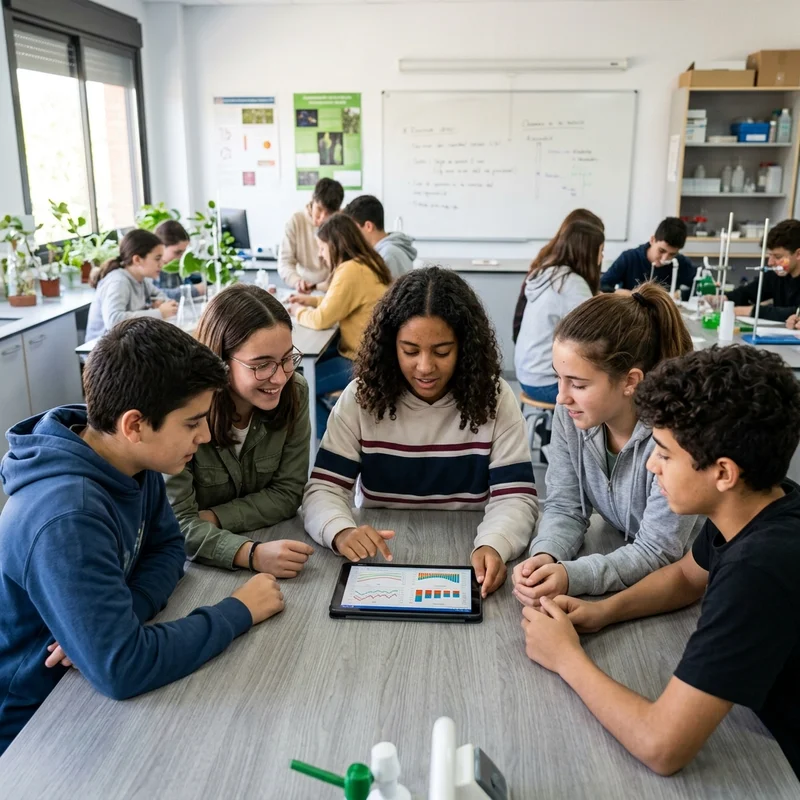
Did you know that the air we breathe in the classroom can be a gateway to sparking your students' scientific curiosity? Thanks to tools like the P-Bit, an environmental microcomputer designed by POWAR STEAM, you can turn any class into an interactive laboratory where your students themselves collect, analyse, and understand real data from their surroundings.
Physics and earth sciences often suffer from an "invisibility" problem: air humidity, sound pressure levels, or variations in light radiation are happening continuously around us, but we can't see them with the naked eye.
When we hand students a portable device equipped with physical sensors and its own screen, the invisible instantly becomes tangible. The question "What happens if I blow on this sensor?" or "Why does this value go up when we close the windows?" triggers the scientific method spontaneously.
With its 6 sensors (air temperature and humidity, light and sound on the board, plus two external probes: soil moisture and temperature), the P-Bit removes the frustration of loose wiring and lets you focus immediately on interpreting the data.
Grabbing attention is only the first step. From this initial spark, teachers can move on to more ambitious projects: data analysis in Excel/CSV, block-based coding in P-Blocks, and designing ecological awareness campaigns led by the students themselves.