The idea
On the Master in Design for Emergent Futures (IaaC and Elisava), Pablo Zuloaga asks how to help smallholder farmers prepare for the climate to come. That is how POWAR is born: Plant Observatory of Weather Adaptability for Resilience.
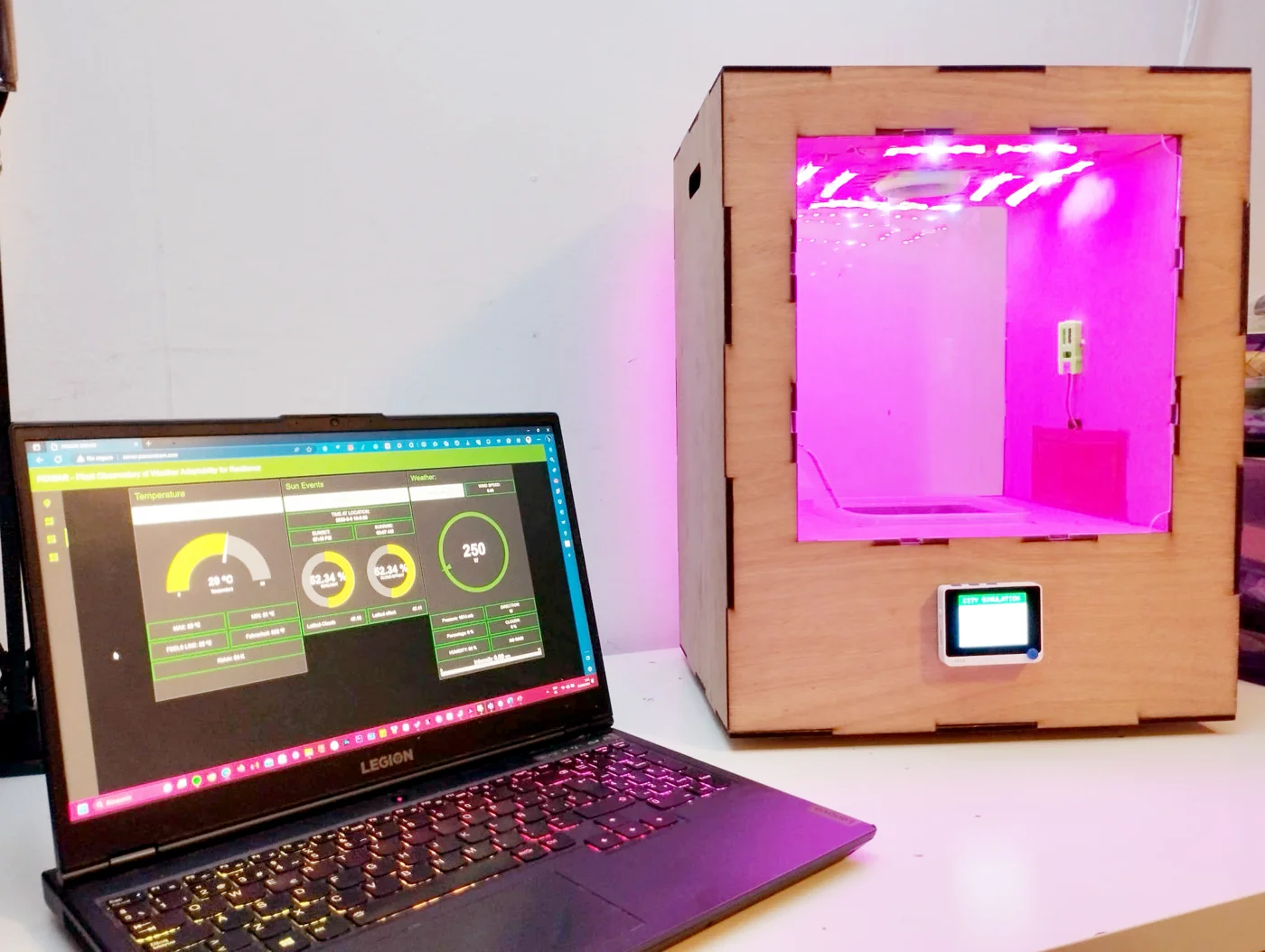
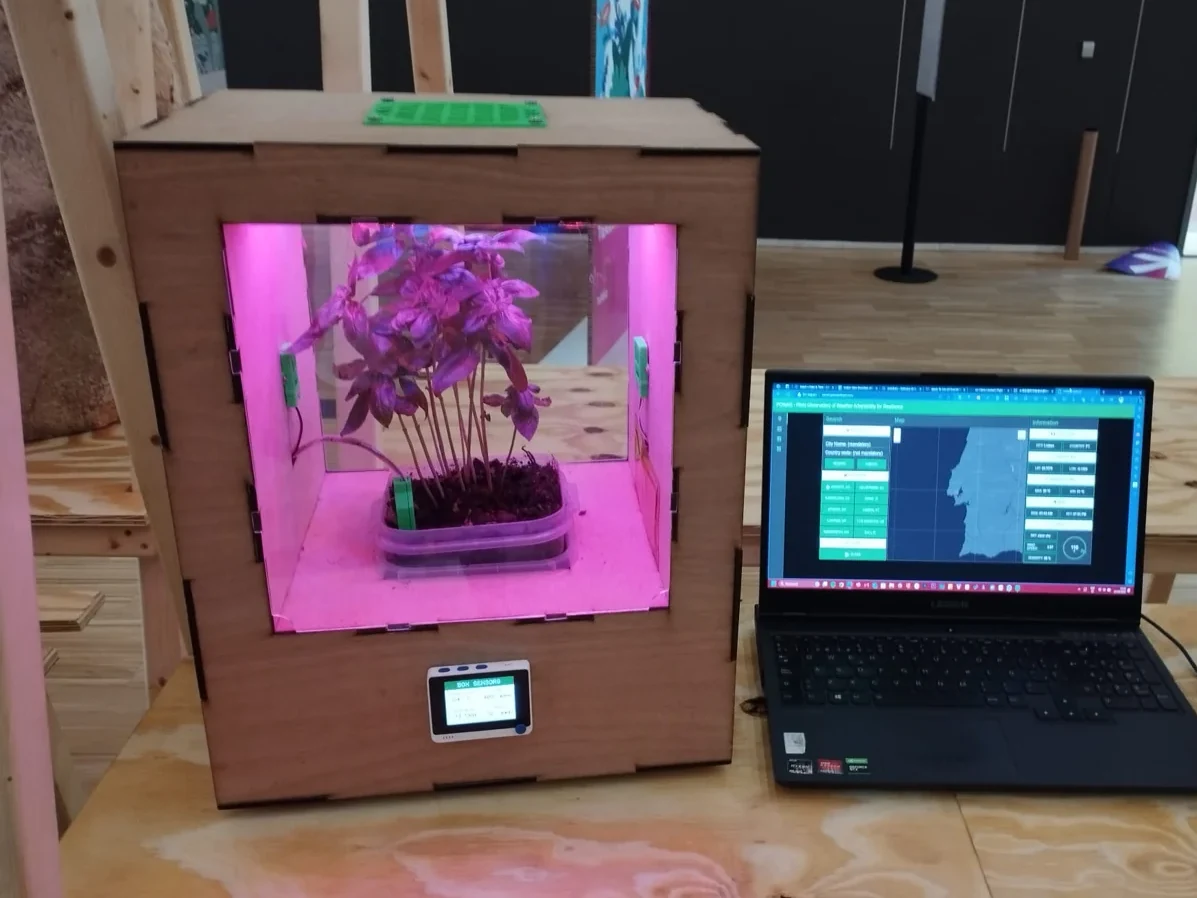
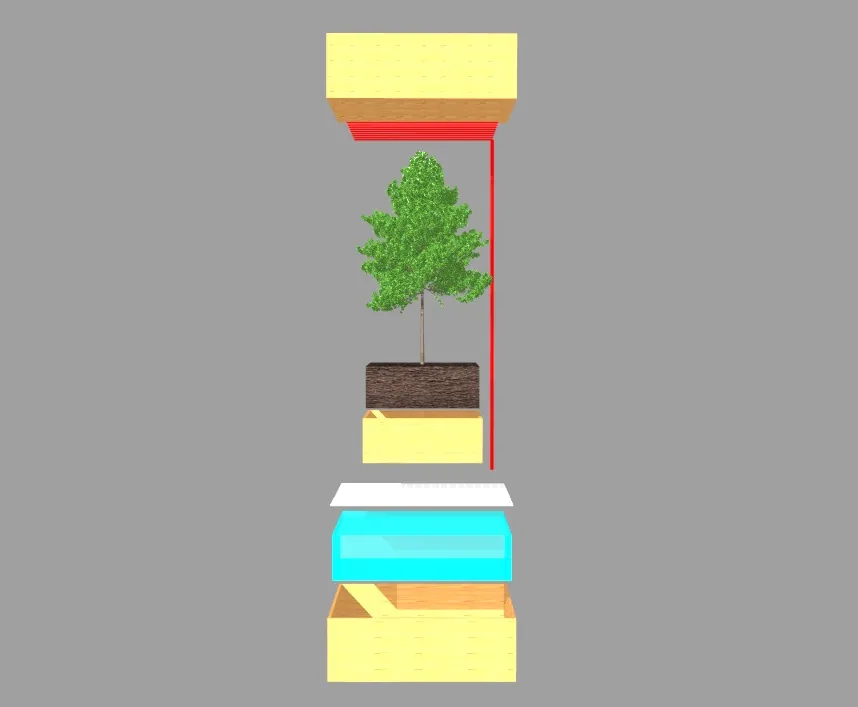
A box for the classroom that recreates the climate of another city, or of a possible future, to see how a plant responds. It is controlled from a web platform and records what its sensors measure.
The platform is for schools already linked to a simulator.

POWAR CS is an educational tool designed for the classroom: students experiment with climate variables in a controlled environment. It combines a physical device with a web-based control platform.
It simulates temperature, humidity, lighting and rain, so students can observe how they affect living things. Climate change, sustainability and environmental resilience move from theory to an experiment in class.
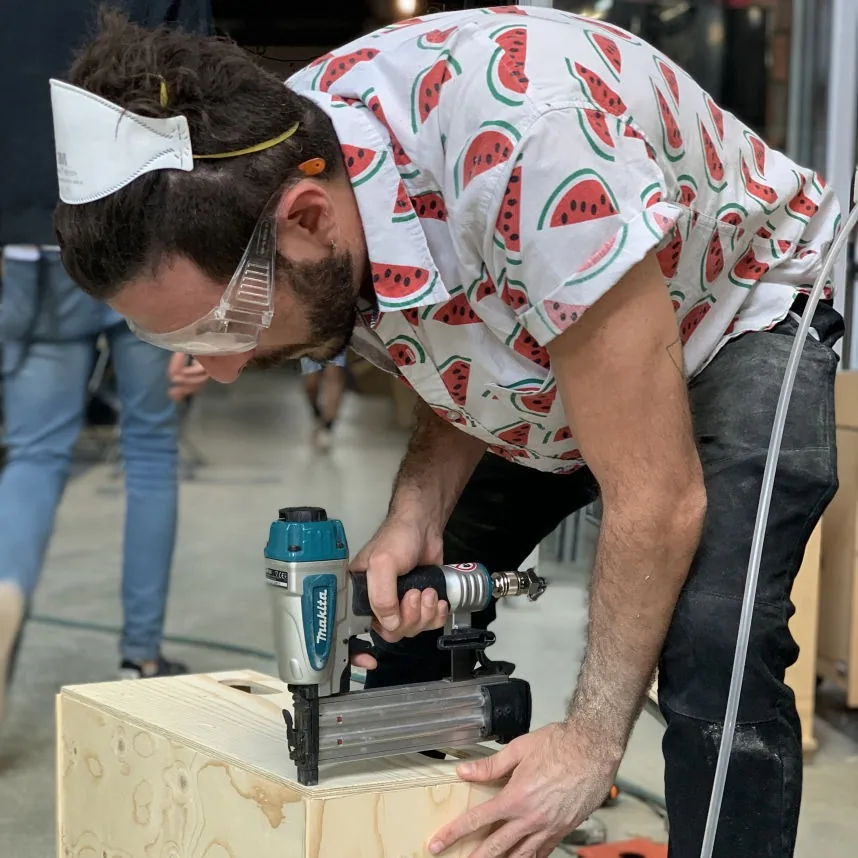
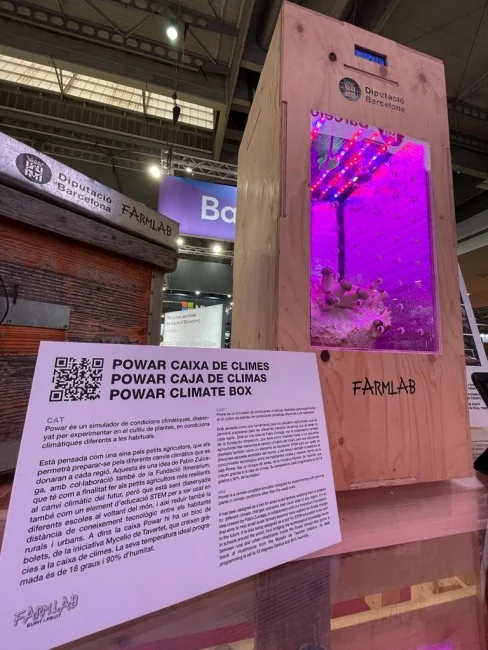
POWAR CS is in preparation, designed for schools already working with several P-Bits that want to scale up to full climate scenarios. The photos on this page show prototypes and carry their year.
You choose a climate on the platform and the box tries to reproduce it inside, with the plant in front of the class.
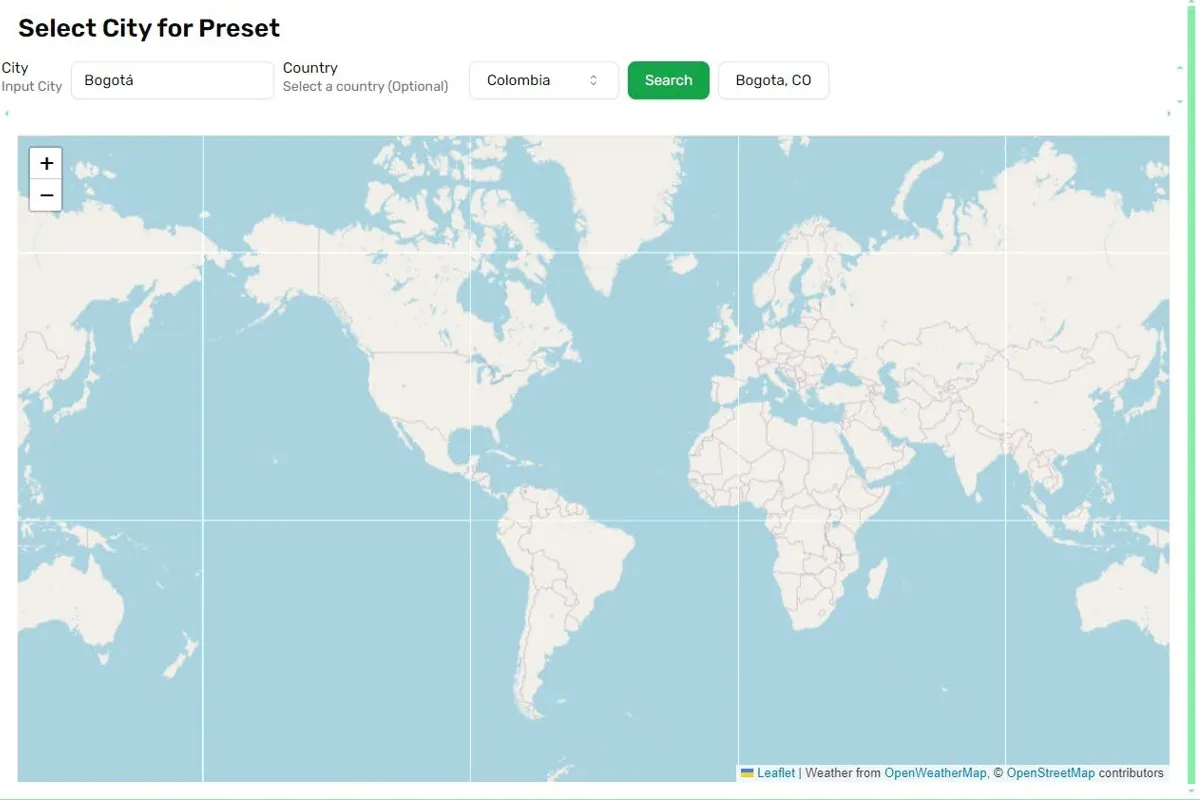
On the platform, you look up a city on the map or set the values by hand. You can also work with the future climate of a city.
Heating, cooling, grow lights and a water pump bring the inside of the box closer to the target values.
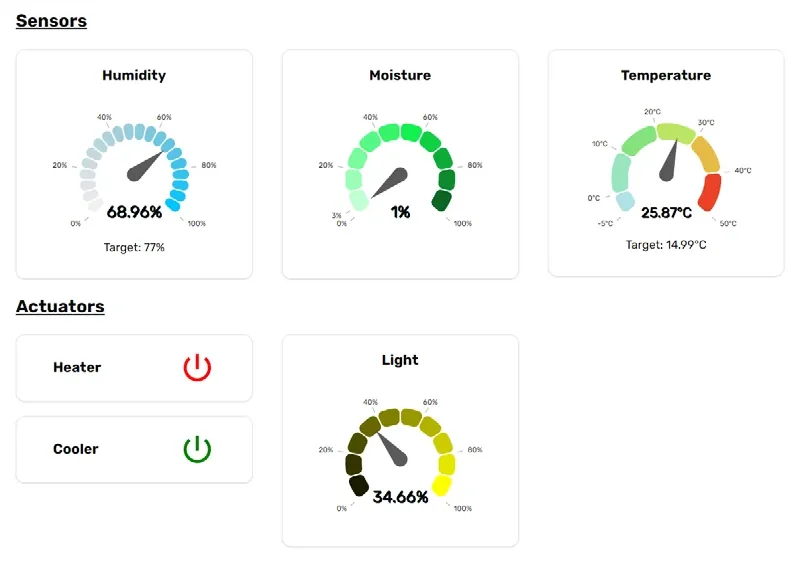
The sensors read the interior and the platform shows it in real time. The data is stored in the cloud.


Four climate variables to observe how they affect living things and the environment.
A heating and cooling system simulates cold and warm climates to study their impact on plants and soils.
It recreates dry and humid environments to study how humidity varies across ecosystems.
Red and blue lights reproduce different levels of intensity, like the sunlight of various places, to see how light influences plant growth.
A built-in water pump simulates rain to explore its effects on soil and plants.
Projects that build environmental awareness, critical thinking and hands-on learning.
Students investigate how changes in climate variables affect plant growth by simulating climate change scenarios. They practise analysis and critical thinking.
Students can compare how different plant species respond to environmental variations, and open a discussion on biodiversity, resilience and adaptation to climate change.
Simulations of rain, humidity and temperature help to address water management, agricultural sustainability and environmental preservation.
With data logging, students learn to collect, analyse and visualize information, a foundation of environmental analysis and climate trend monitoring.
If you want to start measuring now, the P-Bit brings six sensors into the classroom, and here are some climate change experiments to do in class.
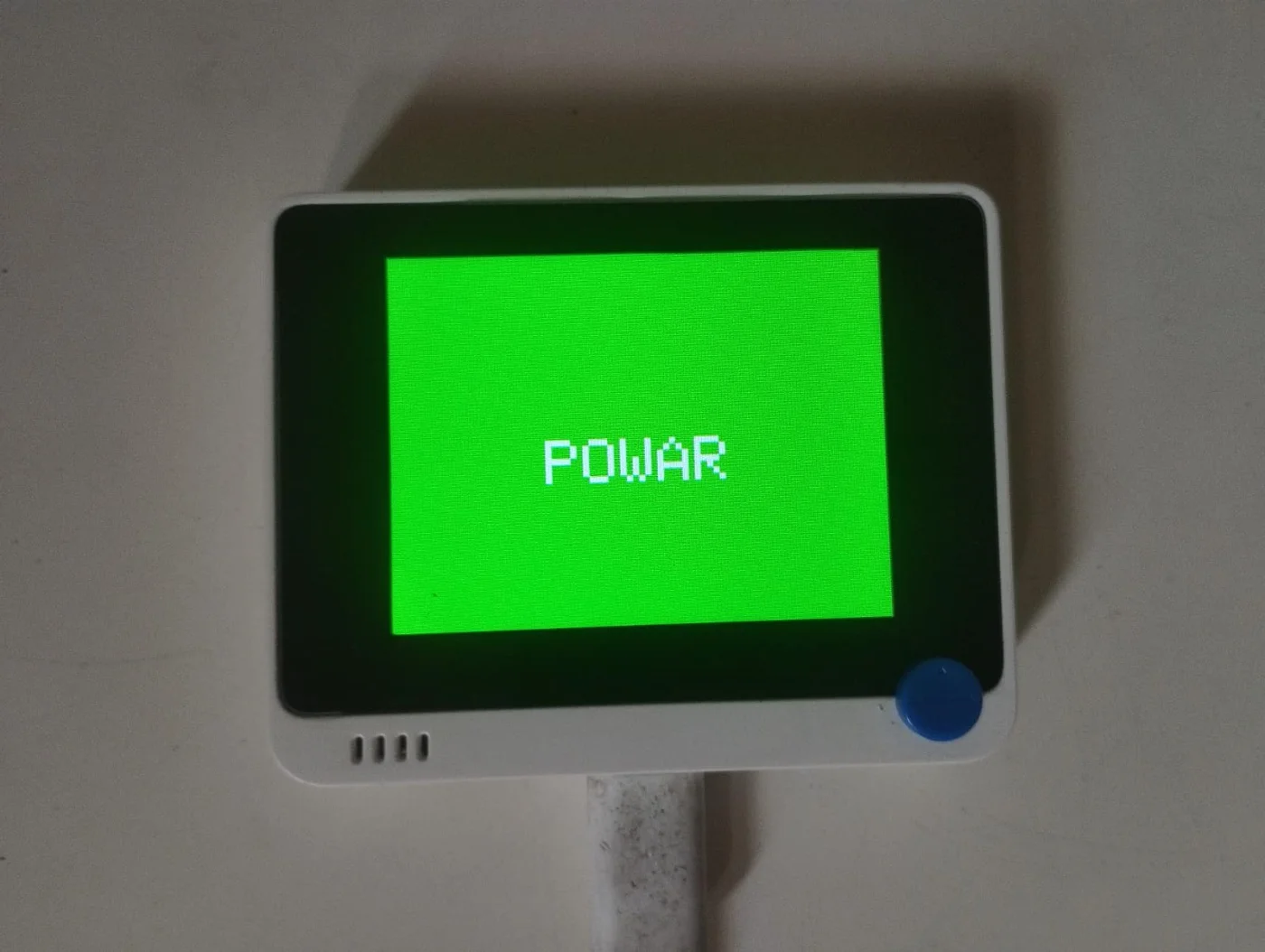
Configuration of the Wio Terminal prototype. POWAR CS is still in preparation, so the final version may change.
| Control system | Wio Terminal, by Seeed Studio |
|---|---|
| Expansion board | Our own board with a 12 V DC input and 12 V and 5 V DC outputs |
| Power | Connects to 220 V mains and runs on 12 V DC |
| Sensors | Air temperature and humidity, and soil moisture |
| Climate | Heating and cooling system |
| Light | Red and blue lights |
| Rain | Built-in water pump |
| Connectivity | Needs Wi-Fi to reach the cloud platform |
| Data | Stored in the cloud (AWS) |
| Platform | Web-based, opens in a browser |
Need the dimensions, the temperature and humidity ranges or the model of each sensor? Write to us and we will send you those of the current version.
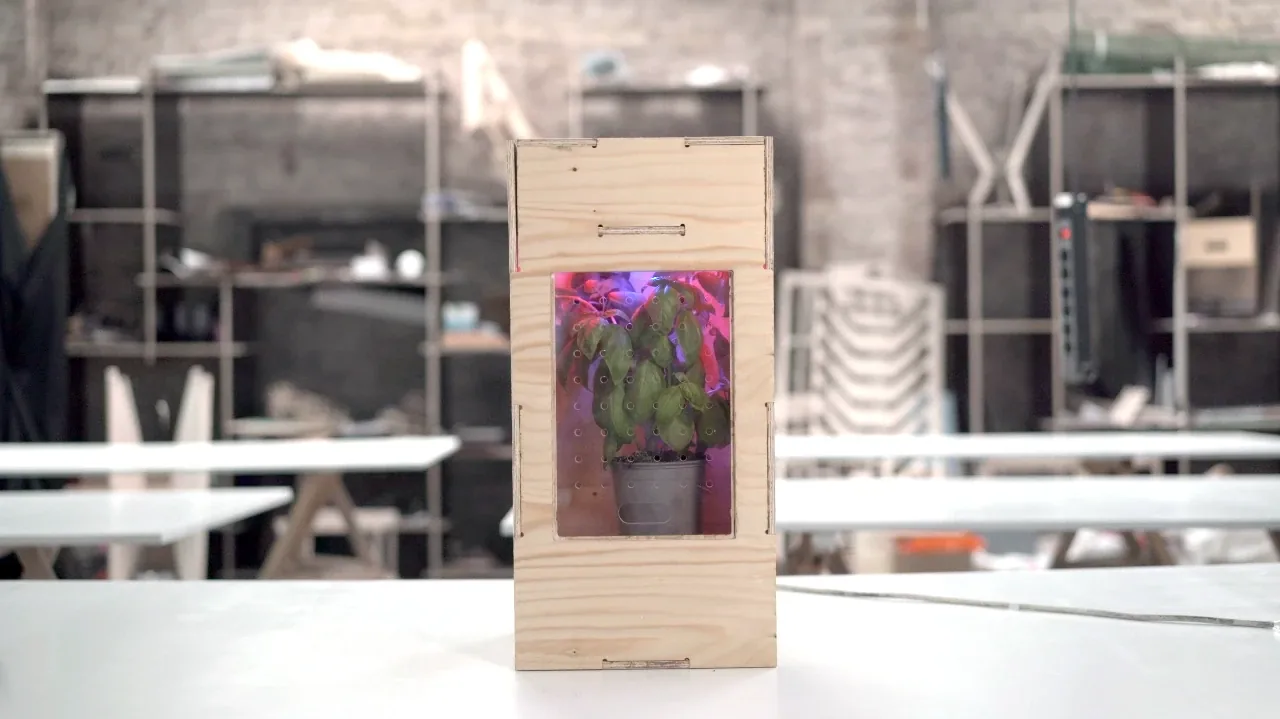
From the first idea to today's box. These are earlier versions, not the final product.

On the Master in Design for Emergent Futures (IaaC and Elisava), Pablo Zuloaga asks how to help smallholder farmers prepare for the climate to come. That is how POWAR is born: Plant Observatory of Weather Adaptability for Resilience.

The first box is built at IaaC and Fab Lab Barcelona: it downloads the real-time weather of any city and reproduces it inside, to see how a plant would grow in another climate.

With the support of the Diputació de Barcelona and Rupit Town Council, a second prototype is built, designed for rural areas. It is shown at the Rupit Rural Innovation Fair and at Smart City Expo World Congress.

The third prototype arrives, with its own board and a web platform to choose the climate. The project wins the IoT Into the Wild contest by Seeed Studio and Hackster.io.

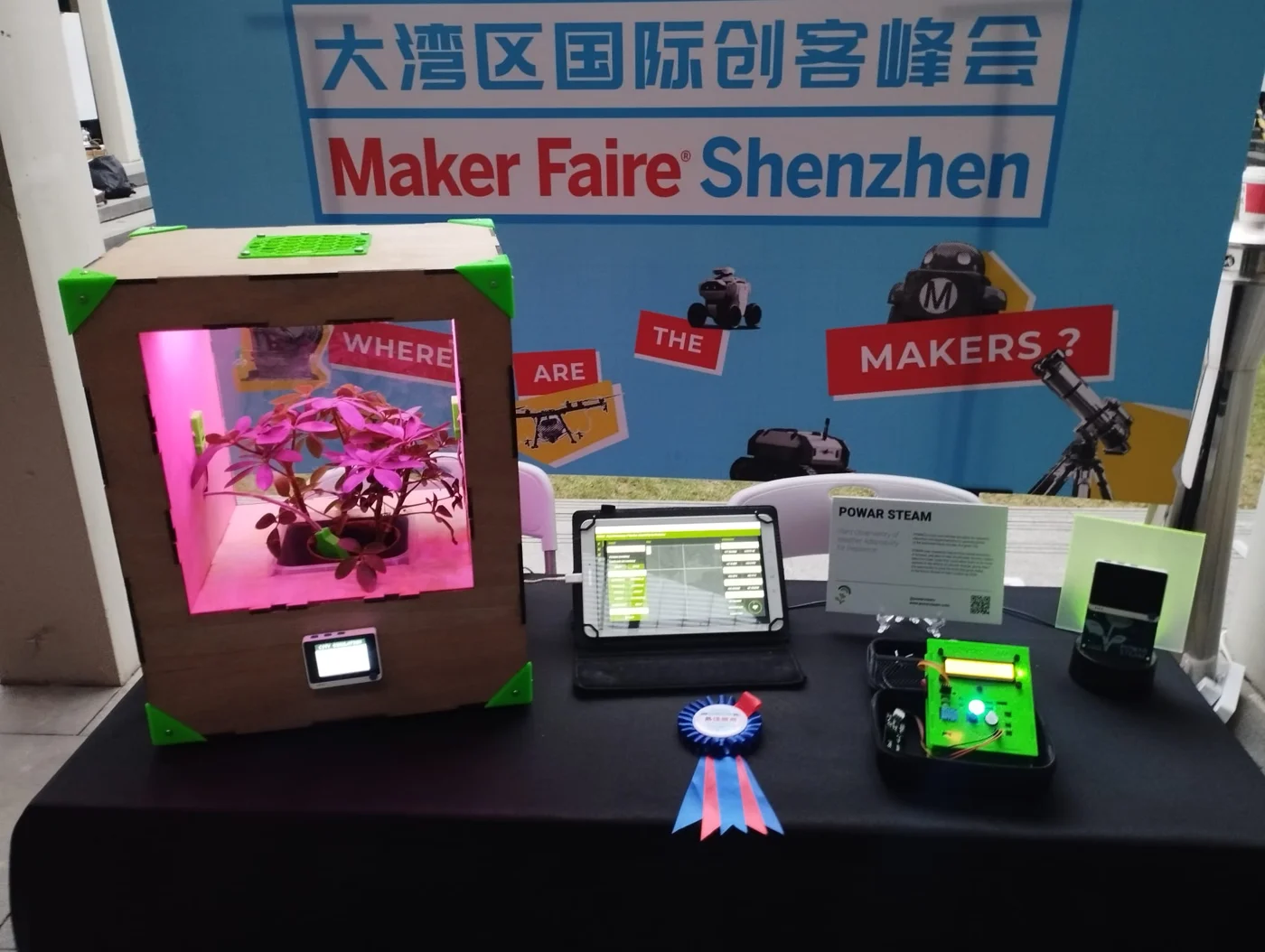
The simulator is shown at Maker Faire Lisbon and at Fixing the Futures in Barcelona. At Maker Faire Shenzhen it wins the Best Exhibit award, with the support of Seeed Studio.

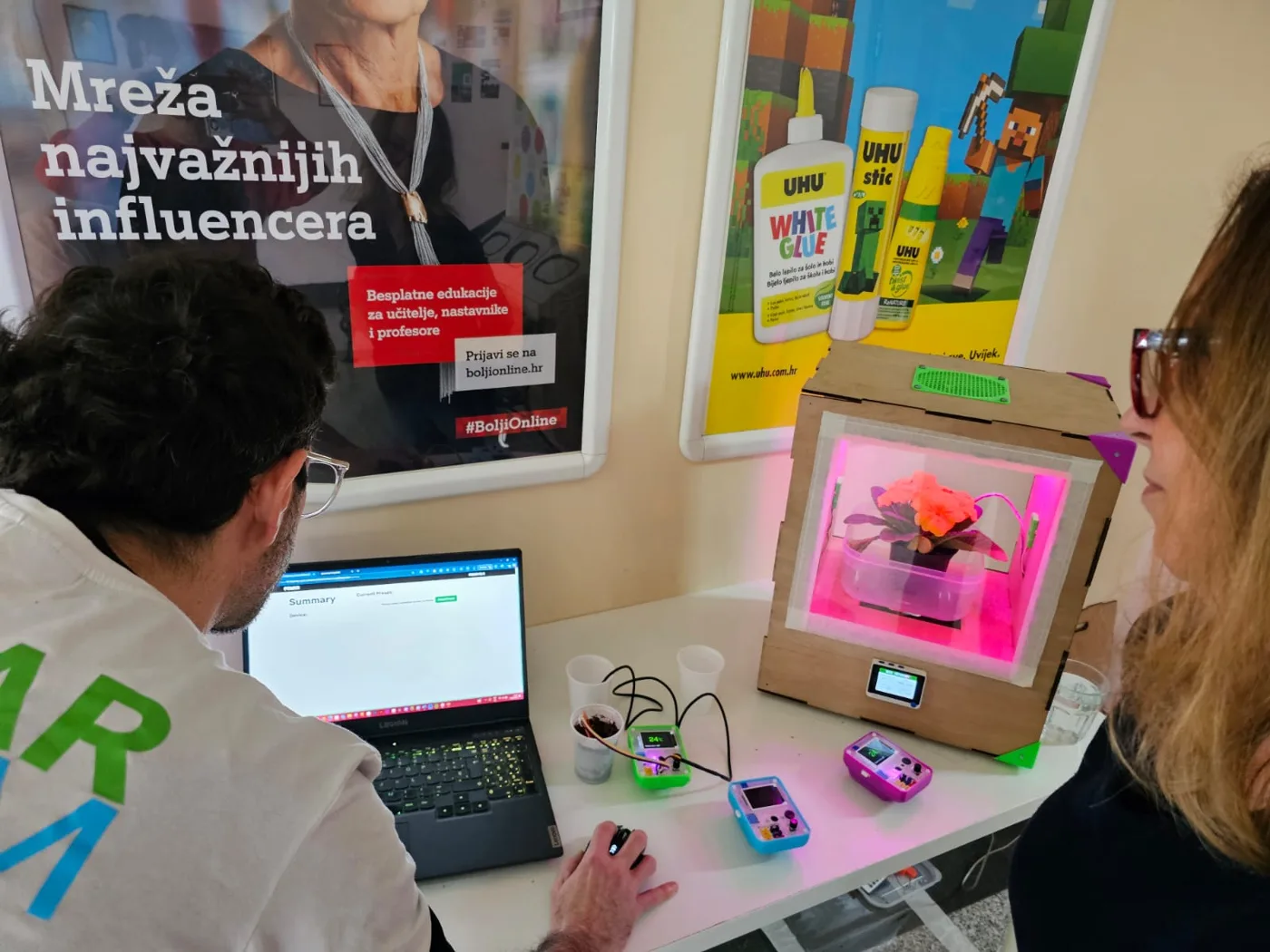
In Croatia a smaller box appears, with an acrylic door and coloured corners, next to the P-Bit v3. That year we prepare the school pilot of the new simulator version.
Both videos open on YouTube.
The full story of the project is on our About us page.