SUSTAINABILITY
5 climate change experiments to run in the classroom (or at home)
By POWAR STEAM
•
August 5, 2026
•
3 min read
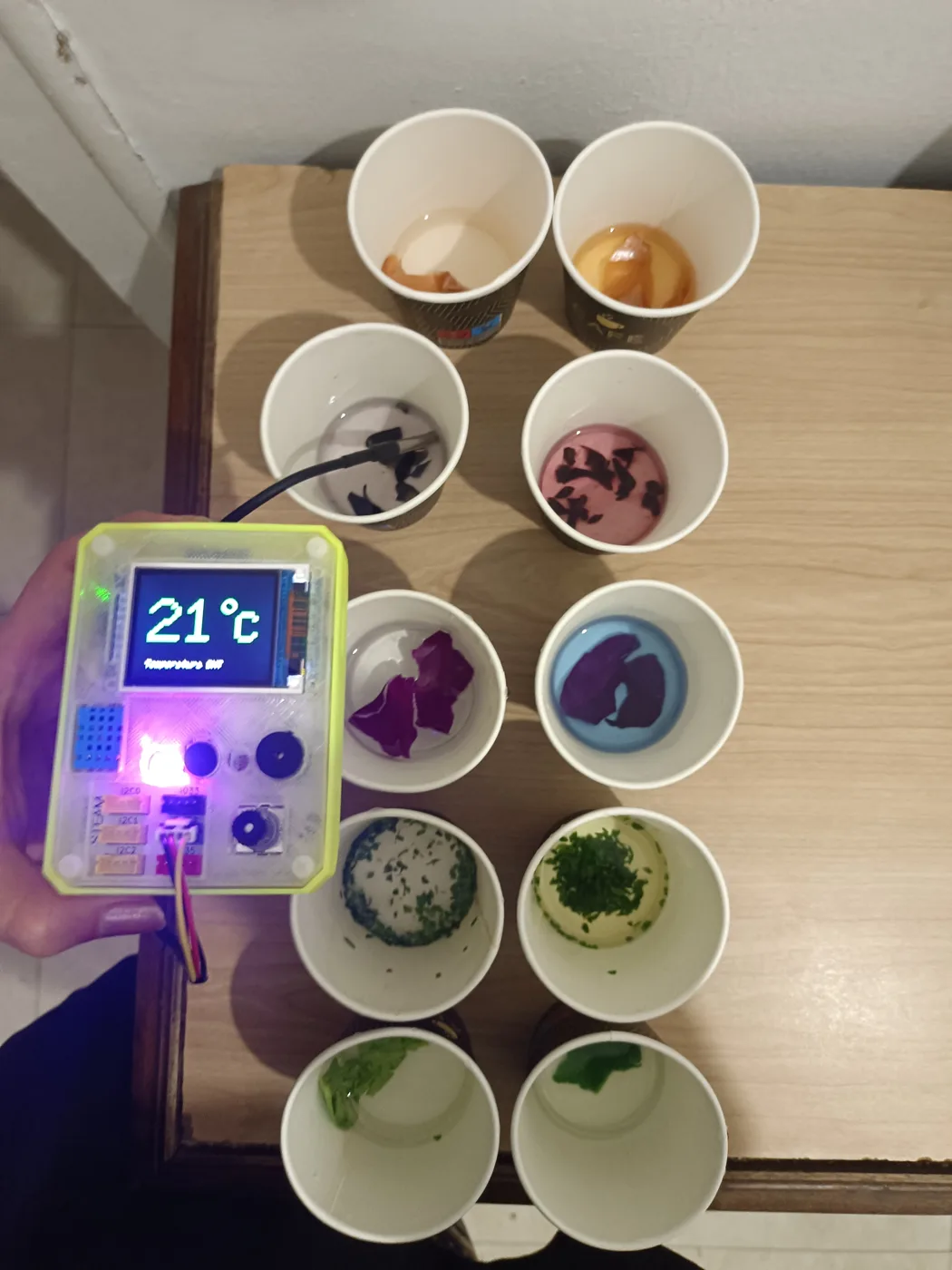
Climate change gets explained with charts, but it gets understood with your hands. These five experiments work in a primary or secondary classroom, and just as well on a kitchen table or a balcony on a Saturday afternoon. The materials are accessible and the result shows up in minutes, not weeks.
Place two thermometers in the sun: one out in the open and one inside a closed glass jar. Within 15-20 minutes, the one in the jar usually reads several degrees higher than the one outside. The glass lets light in but traps the heat that bounces back, the same way greenhouse gases trap heat in the atmosphere. It's the tabletop version of the problem.
Cut white, grey and black card of the same size and leave them in the sun for half an hour. With a surface temperature probe (like the P-Bit's DS18B20, placed directly on each card), measure how much hotter the black one gets compared to the white one. This explains why melting polar ice accelerates warming: as the white ice disappears, it exposes the dark ocean underneath, which absorbs more heat instead of reflecting it.
Prepare water with a homemade pH indicator (boiled red cabbage juice) and blow into it with a straw for a minute. The CO2 in your breath dissolves in the water and forms carbonic acid, and the indicator changes colour in real time. It's the same chemical reaction that's acidifying the oceans on a planetary scale, just visible in a glass here.
Go out to the playground or the street and measure the surface temperature of asphalt, grass and the shade under a tree at the same time. The several-degree differences between surfaces just metres apart are the perfect starting point for talking about urban planning and cooler cities. The article on heat islands and school microclimates develops this experiment into a full project.
With a temperature and humidity sensor (like the P-Bit's DHT11) in a closed room with several people in it, log the readings every 10 minutes for an hour without opening any windows. Relative humidity usually climbs in a measurable way. Open the window for five minutes and repeat the measurement: you can see the change in the data, not just feel it as "stuffy air." It's an honest way to talk about ventilation with real data, without needing a CO2 sensor that most classrooms don't have.
All five work just as well at a summer camp, an after-school science club, or at home on a weekend. The scientific method doesn't care whether it's a school desk or a kitchen table: the variable matters more than where it's measured.
If you want to go deeper into how the sensors here actually work, the article on the best environmental sensors for school projects explains each one individually.
We wrote this article with AI assistance to move faster, and reviewed it by hand before publishing: technical data and links are verified by our team. We're sharing this because it feels like the honest way to do it, not because a law requires it.