STEAM PROJECTS
What is the STEM competence in Spain's LOMLOE?
By POWAR STEAM
•
August 9, 2026
•
3 min read
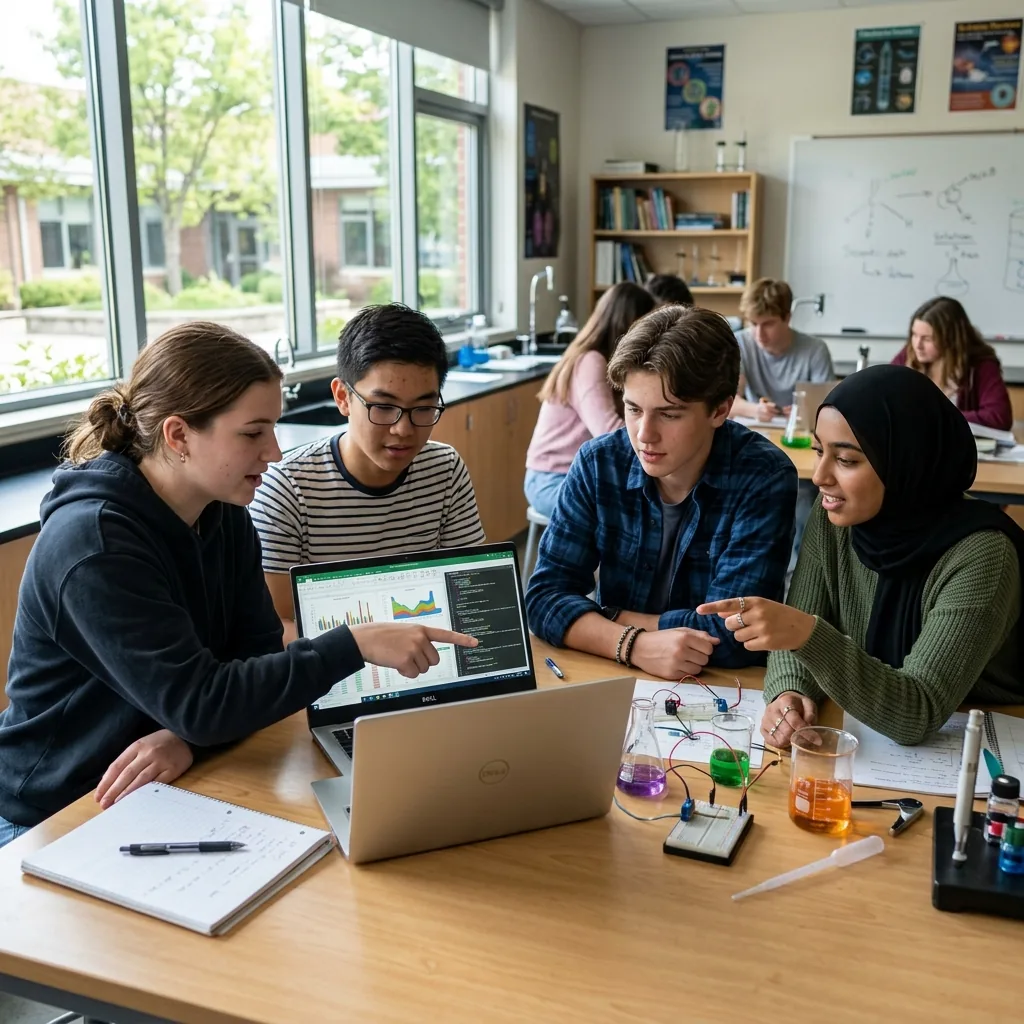
With LOMLOE, Spain's curriculum took a definitive turn toward competence-based learning. One of its cornerstones is the mathematical, scientific, technological and engineering competence, known as the STEM competence. The hard part isn't understanding it in the abstract — it's translating it into something you can assess on a Tuesday morning.
Organic Law 3/2020 defines this competence as the ability to use mathematical thinking to understand the physical world, and to apply the scientific method and engineering principles to transform the environment responsibly and sustainably.
The difference from previous laws isn't cosmetic. Before, science and maths were taught in separate compartments. LOMLOE demands real integration: it's not enough for students to solve an equation on the board — they have to use that equation to calculate, for example, the efficiency of a system they built in technology class.
LOMLOE treats the STEM competence as a single cross-cutting macro-competence, not as three separate subjects. In practice, that means working on it through Learning Situations that combine science, technology and mathematics in the same challenge.
According to the European Strategy for STEM Education, which LOMLOE adopts, the competence breaks down into:
A concrete example: a group of Year 10 students measures noise pollution in their town with portable sensors (science: deciding which variable to measure and why), programs the data logging in blocks (technology and engineering: connecting sensors, automating collection), and calculates averages, medians and trends from the data they collected (mathematics: statistical analysis applied to a real problem, not a textbook exercise). All three competences worked in the same session, on the same problem.
If you want to see this example developed as a full Learning Situation, with the four phases and the assessment rubric, the article how to build a Biology and Technology Learning Situation with real data breaks it down step by step.
We wrote this article with AI assistance to move faster, and reviewed it by hand before publishing: technical data and links are verified by our team. We're sharing this because it feels like the honest way to do it, not because a law requires it.